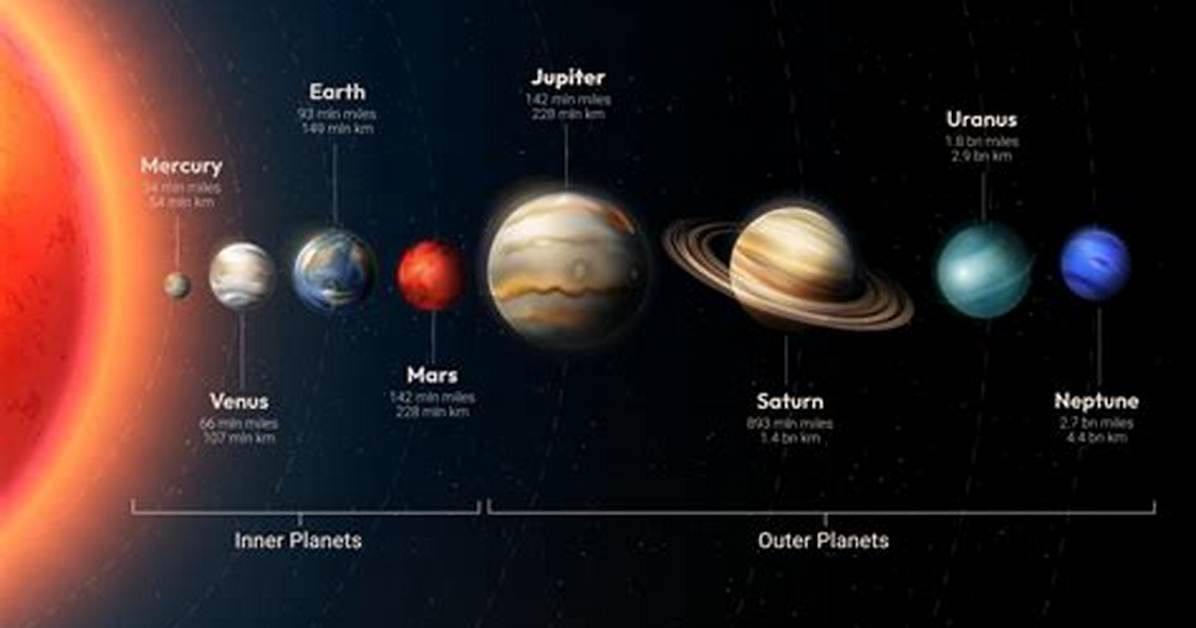
If the Size of the Orbit (A) Is Expressed in Astronomical Units (1 Au Equals the Average Distance Between the Earth and Sun) and the Period (P) Is Measured in Year's, Then Kepler’s Third Law Says P2 = A3. Where P Is in Earth Year's, a Is in Au and M Is the Mass of the Central Object in Units of the Mass of the Sun.
A Planet Whose Distance from the Sun Is 2 Au Would Have an Orbital Period of How Many Earth-Year's?
•
•
7 min read
★ Key Takeaways
If the Size of the Orbit (A) Is Expressed in Astronomical Units (1 Au Equals the Average Distance Between the Earth and Sun) and the Period (P) Is Measured in Year's, Then Kepler’s Third Law Says P2 = A3. Where P Is in Earth Year's, a Is in Au and M Is the Mass of the Central Object in Units of the Mass of the Sun.
Direct Answer • Key Takeaway